
What should I consider when purchasing a commercial storage system?
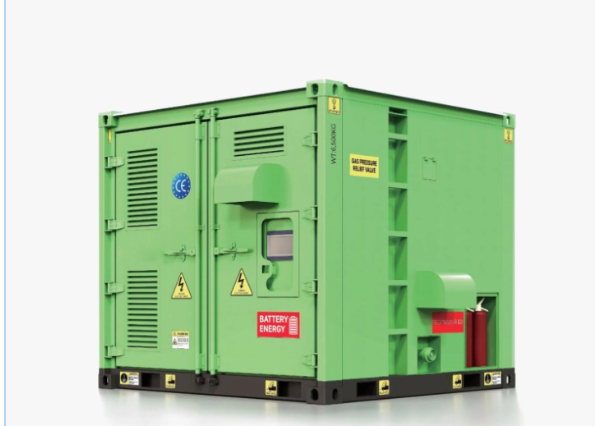
Purchasing a commercial storage system is a strategic decision that impacts operations, cash flow, and resilience for many years. In practice, you must reconcile technical specifications, battery lifecycle, power electronics and controls, safety and regulatory compliance, and financial models. Data-driven project teams must first quantify two key metrics: power rating and energy capacity. For example, managing a single-hour peak demand of 250 kW will require a very different commercial energy storage system than providing four hours of daily backup power for 250 kW of critical loads. Therefore, it’s crucial first to clarify operational objectives and let these drive specification, procurement, and ROI calculations.
System Sizing, Performance Targets, and Use Cases for Commercial Storage System
First, define the goals you want your commercial storage system to achieve. Typical use cases include demand charge reduction, time-of-use arbitrage, backup power and resiliency, renewable energy integration and ramping, and participation in capacity or ancillary services markets. Each use case requires a different sizing calculation: demand charge management focuses on short, high-power discharges, while load shifting or resiliency focuses on longer durations. Therefore, break down your specifications into two relevant numbers: kW and kWh, then specify the desired duration. Next, quantify the expected daily throughput, as battery wear varies with cycle number, which directly impacts lifecycle cost.
Also, set performance targets for round-trip efficiency, response time, and operating temperature range. Finally, incorporate application-specific KPIs: minimum state of charge (SoC) required in emergencies, islanding capability for off-grid operation, and allowable DoD.
Battery Chemistry, Lifecycle, and Total Cost of Ownership for Commercial Storage System
For any commercial storage system, the choice of battery chemistry is a core determinant of cost, safety, and lifecycle. The primary chemistries in commercial projects are LiFePO₄/LFP and NMC variants, but alternatives offer niche advantages. LFP generally provides longer cycle life and enhanced thermal stability, making it useful where long calendar life and deep-cycle operation are essential. For specific designs, NMC can offer higher energy density at a lower initial cost per kWh. Key metrics for cross-chemistry comparisons are cycle life at a specified DoD, usable DoD, round-trip efficiency, and energy density.
It is essential to convert cycle life to lifetime energy delivered, and then to $/kWh delivered, for an accurate TCO comparison. Additionally, include replacement costs and end-of-life recycling fees in your financial model. Finally, review battery and battery pack certifications (UL, IEC) and insist that suppliers be transparent about the BOM source, as variations in battery quality can directly impact the operation and warranty of your commercial energy storage system.
Power Electronics, Controls, and Integration Requirements
Commercial storage systems encompass more than just batteries: the inverter, power conversion system (PCS), and EMS define how the commercial energy storage system interacts with the grid, on-site generation, and building loads. You need to determine whether you require an AC- or DC-coupled architecture—DC coupling optimizes round-trip efficiency when paired with a PV array, while AC coupling simplifies retrofits. Carefully review the inverter’s ratings: continuous and peak power, voltage range, permissible overload, grid-forming and grid-following capabilities, and islanding. Control capabilities are crucial: Does the supplier offer out-of-the-box demand charge management algorithms, schedule-based time-of-use arbitrage mechanisms, or API access for custom scheduling?
Open communication and network security measures are also required. For projects entering the market, verify interconnection and grid service certifications, and need test evidence of response time and accuracy. Ultimately, PCS and EMS determine achievable revenue streams, so any proposal requires rigorous, application-specific performance data and battery specifications.
Safety, Thermal Management, and Regulatory Compliance
Safety is paramount when deploying commercial storage systems. Expect suppliers to provide independent safety test reports, evidence of compliance with relevant standards, and clearly documented safety cases for specific chemistries and battery pack architectures. Thermal management strategies are crucial; efficient cooling prevents the risk of thermal runaway and prolongs battery life. Examine system-level controls, including multiple temperature sensors, automatic thermal derating algorithms, and hardware disconnects, to isolate faulty modules.
Additionally, the physical isolation of the battery room, ventilation plans, and appropriate fire suppression strategies tailored to the chemistry are required. Furthermore, emergency shutdown procedures must be established. From a regulatory perspective, confirm that the design complies with local electrical codes and permitting requirements, and seek vendor support during the permitting process to ensure compliance. Also, documented plans for transportation, on-site handling, and end-of-life battery recycling are required. Finally, include risk assessments and mitigation plans in the contract.
Operation, Maintenance, Warranty, and Service Agreements
Operational readiness determines long-term value. When selecting a commercial storage system, look for transparent operational and maintenance commitments: remote monitoring, alarm handling procedures, preventative maintenance plans, and spare parts availability. Insist on performance guarantees covering energy throughput or capacity retention, rather than vague “10-year warranty.” Ask how the warranty addresses performance degradation caused by depth of discharge and cycling—will the vendor prorate replacement costs or offer a battery buyback option? Also negotiate a service-level agreement (SLA) for response time and mean time to repair (MTTR).