
Professional Development in the Digital Age: Preparing Teachers for Technology-Enhanced Learning
The Evolving Landscape of Teacher Preparation
The integration of tech into educational environments has fundamentally transformed the knowledge and skills required for effective teaching. Today’s educators must develop proficiency not only in their content areas and pedagogical approaches but also in an ever-expanding array of digital tools and platforms. This technological dimension adds complexity to teacher preparation and professional development, requiring systematic approaches to building digital competencies. From pre-service education to ongoing professional learning, the systems that support teacher growth must evolve to address these changing demands. This evolution represents both a challenge and an opportunity for educational institutions committed to preparing teachers for contemporary classrooms.
Current Gaps in Technology-Focused Professional Development
Despite widespread recognition of technology’s importance in education, many professional development programs fail to adequately prepare teachers for technology integration. Traditional approaches often emphasize tool-specific training over pedagogical application, focusing on software features rather than instructional strategies. One-time workshops frequently lack the follow-up support needed for successful implementation, leaving teachers to navigate complex integration challenges independently. Additionally, professional learning experiences often adopt a one-size-fits-all approach that fails to account for teachers’ varying technological proficiency, content areas, and student populations. These limitations contribute to inconsistent technology implementation and underutilization of digital resources in many educational settings.
Characteristics of Effective Technology Professional Learning
Research and practice have identified several characteristics of effective technology-focused professional development. Successful programs embed technology learning within authentic teaching contexts rather than treating it as a separate domain. They provide sustained engagement over time rather than isolated events, allowing teachers to experiment with new approaches and receive ongoing feedback. Effective professional learning experiences balance instruction on specific tools with broader discussions of digital pedagogy and create opportunities for teacher collaboration and peer learning. They also differentiate to accommodate various entry points and learning needs while maintaining coherent school-wide or district-wide implementation goals. These principles can guide the design of more impactful professional development experiences.
Building a Culture of Digital Innovation
Beyond formal professional development, creating a school culture that supports technological innovation plays a crucial role in teacher growth. Such cultures normalize experimentation and position occasional failures as valuable learning opportunities rather than professional shortcomings. They establish structures for knowledge sharing among staff members, enabling organic dissemination of effective practices. Leadership in technology-forward schools distributes responsibility for innovation across the organization rather than centralizing it with technology specialists. They also explicitly connect technology initiatives to core educational values and student learning goals, helping teachers understand digital tools as means rather than ends. This supportive cultural context greatly enhances the impact of formal professional learning experiences.
Leveraging Teacher Leadership and Peer Mentoring
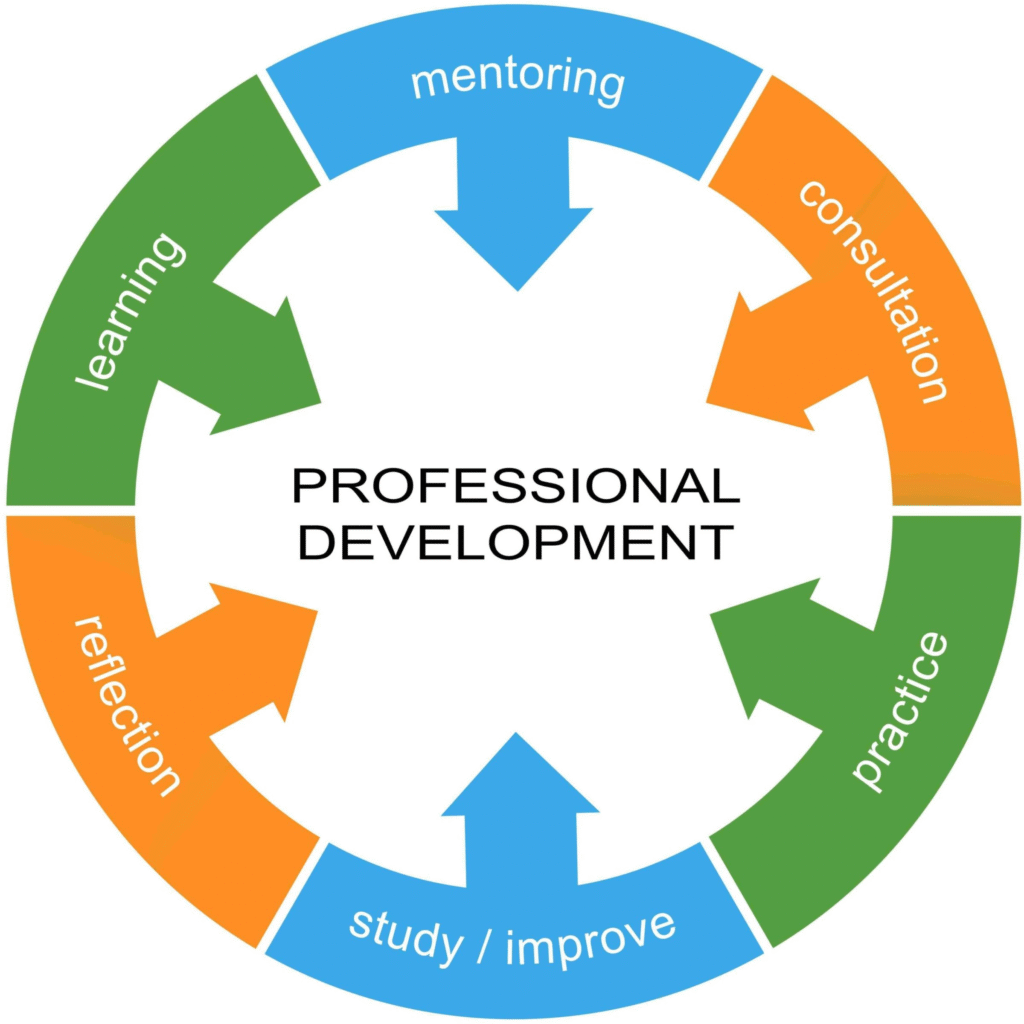
Teacher leadership represents a powerful but often underutilized resource for technology professional development. Identifying and supporting teacher technology leaders creates a sustainable internal capacity for ongoing professional learning. These teacher leaders can provide just-in-time coaching, facilitate professional learning communities focused on technology integration, and serve as bridges between classroom practitioners and technical staff. Peer mentoring approaches recognize that teachers often learn most effectively from colleagues who understand their specific contexts and challenges. When structured thoughtfully, these teacher-led models can dramatically increase the reach and relevance of technology professional development while building organizational capacity for continuous improvement.
Addressing Diverse Teacher Needs and Preferences
Just as students bring diverse needs and preferences to learning experiences, teachers approach technology professional development from various starting points and with different learning styles. Effective professional learning systems acknowledge these differences and provide multiple pathways for growth. Some teachers may benefit from structured workshops with step-by-step guidance, while others prefer self-directed exploration. Some learn best through one-on-one coaching, while others thrive in collaborative team settings. Many teachers appreciate blended approaches that combine face-to-face interaction with online resources they can access at their convenience. By offering diverse learning modalities, schools increase the likelihood that all teachers will engage meaningfully with professional development opportunities.
Connecting Technology to Pedagogical Content Knowledge
Rather than treating technology as a separate domain, effective professional development helps teachers integrate digital tools with their existing pedagogical content knowledge. This integrated approach recognizes that technology decisions should be driven by instructional goals and content-specific considerations. For instance, mathematics teachers need to understand how graphing applications can deepen students’ conceptual understanding of algebraic relationships, while language arts teachers benefit from exploring how digital annotation tools can enhance close reading practices. By anchoring technology learning in teachers’ content expertise, professional development becomes immediately relevant to their instructional practice and more likely to translate into classroom implementation.
Measuring the Impact of Technology Professional Development
Evaluating the effectiveness of technology-focused professional development requires looking beyond teacher satisfaction surveys or attendance records. Comprehensive evaluation approaches examine changes in teachers’ knowledge and skills, shifts in instructional practices, and ultimately, impacts on student learning and engagement. Data collection might include classroom observations focused on technology integration, analysis of teacher-created digital learning materials, and assessment of student digital products. Effective evaluation systems also create feedback loops that inform ongoing program improvement, ensuring that professional learning experiences evolve in response to changing technologies and emerging teacher needs.
Addressing Resistance and Building Teacher Agency
Teacher resistance to technology integration often stems from legitimate concerns rather than simple obstinacy. Professional development approaches that acknowledge and address these concerns—whether related to time constraints, technical difficulties, pedagogical uncertainties, or philosophical questions—are more likely to gain teacher buy-in. Effective programs build teacher agency by involving educators in decision-making about technology adoption and implementation. They differentiate between technologies that are required for institutional functions and those where teachers have more discretion, allowing for appropriate professional autonomy. This emphasis on teacher voice and choice helps transform resistance into productive engagement with technological possibilities.
Creating Systemic Support for Ongoing Learning
Sustainable technology professional development requires systemic support structures that extend beyond individual learning experiences. These structures include dedicated time for teacher collaboration and experimentation, readily available technical assistance, and clear processes for requesting additional resources or support. They also encompass aligned evaluation systems that recognize and reward innovative teaching practices rather than penalizing the calculated risks that technological experimentation sometimes entails. When professional learning exists within these supportive systems, teachers can more easily translate new knowledge and skills into transformed classroom practices that enhance student learning opportunities.
Future Directions in Technology Professional Learning
As educational technologies continue to evolve, so too must approaches to teacher professional development. Emerging models emphasize more personalized learning pathways that respond to individual teacher needs and interests while maintaining coherence with broader institutional goals. Many innovative programs leverage the same digital tools that teachers are learning to use with students—from learning management systems to video annotation platforms—creating authentic contexts for technology skill development. Micro-credentialing approaches provide more granular recognition of teacher learning, while virtual coaching models extend access to expertise beyond geographical limitations. These evolving approaches promise to make professional learning more responsive, accessible, and directly applicable to classroom practice in the digital age.