
What Makes the Best Self Cleaning Litter Box Worth Owning
Cats are fastidious animals, yet the job of keeping their bathroom clean falls entirely on us. Twice a day, sometimes more, someone has to grab the scoop, sift through clumps, and carry the evidence to the trash. Miss a day and the smell announces itself from the hallway. Go away for a weekend and the box becomes a negotiation. This is why so many households eventually start looking at automatic options — not because they are squeamish, but because the manual routine quietly eats time and patience.
A self cleaning litter box promises to take that chore off your hands. The idea sounds simple: the box senses when your cat has finished, rakes the waste into a sealed compartment, and resets itself for the next visit. In practice, the difference between a helpful machine and a frustrating one comes down to how well those steps are engineered. Understanding what the category actually does — and where it falls short — makes it much easier to judge whether one belongs in your home.
The Daily Reality of Manual Scooping
Manual scooping looks trivial until you add it up. Two cats, two visits each per day, plus the occasional middle-of-the-night trip, and you are handling a scoop dozens of times a week. Each session takes a few minutes, but the real cost is attention: you cannot fully relax on a work trip, you postpone dinner guests, and you develop a nose that detects ammonia from another room.
There is also a health dimension. A box that sits dirty for more than a day becomes a breeding ground for bacteria, and cats are notoriously willing to protest by eliminating outside the box. Once that habit forms, retraining takes weeks. Many owners describe the same turning point: they did not buy a machine because they were lazy, they bought one because the schedule stopped fitting their life.
This is the gap that the best self cleaning litter box is designed to close. Instead of relying on memory and motivation, the box handles the interval between visits on its own, so the litter stays level and the waste stays contained even when your day runs long. The convenience is real, but it only holds up if the machine cycles reliably and your cat accepts it.
How a Self Cleaning Litter Box Actually Works
The mechanics vary between models, but nearly every automatic box follows the same sequence: detect, separate, contain, reset. Knowing that sequence helps you evaluate marketing claims, because each stage has its own failure modes.
The Sensor and Rake Cycle
Most units use weight or motion sensors to confirm that a cat has entered and left. After a short delay — usually a few minutes — a rake or rotating drum moves the litter, lifting solid waste into a holding compartment while leaving clean litter behind. The delay matters: it gives clumps time to harden so they do not smear across the drum. A well-tuned cycle is quiet and deliberate. A poorly tuned one startles cats and leaves broken clumps behind, which is exactly the outcome you were trying to avoid.
Waste Storage and Odor Control
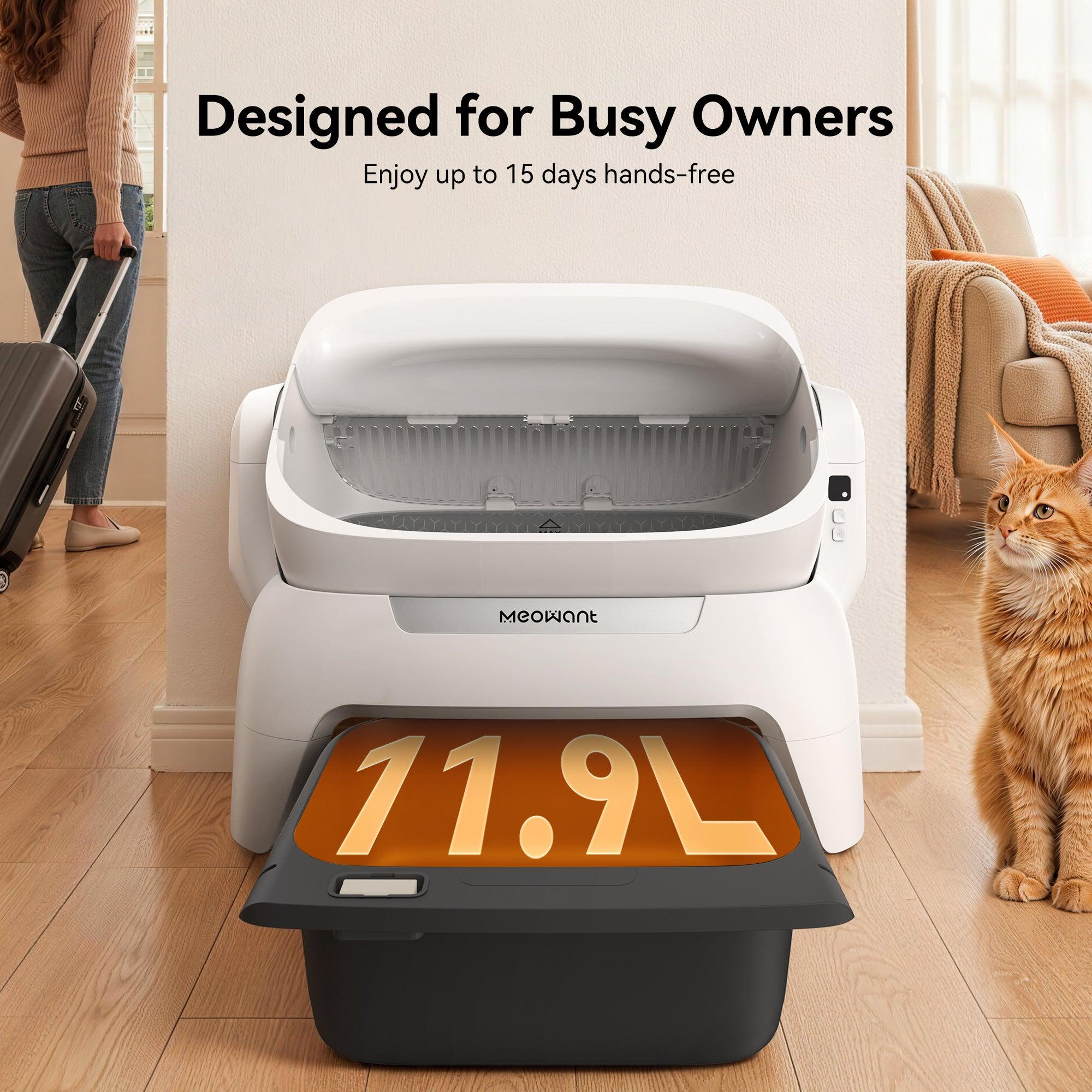
Waste sits in a lined compartment, ideally with a lid and a carbon filter to slow odor escape. Capacity determines how often you empty it; a household with two cats will fill a small drawer faster than the product photos suggest. Odor control is a system, not a single feature — sealing, filtering, and regular emptying all contribute. No machine eliminates the need to change the bag, but a good design stretches the interval to something reasonable, often close to a week for a single cat.
What Separates the Best Self Cleaning Litter Box From the Rest
Specifications tell only part of the story. The models owners keep using tend to share a few practical qualities that are easy to overlook in a showroom.
Safety Features That Protect Cats
Sensors must fail safe. If a cat re-enters mid-cycle, the mechanism should stop immediately and resume only when the box is clear. Look for weight thresholds that prevent cycling under a light cat, manual override controls, and a design without pinch points. Cats are curious and unpredictable; a machine that assumes perfect timing will eventually scare one.
Litter and Sizing Compatibility
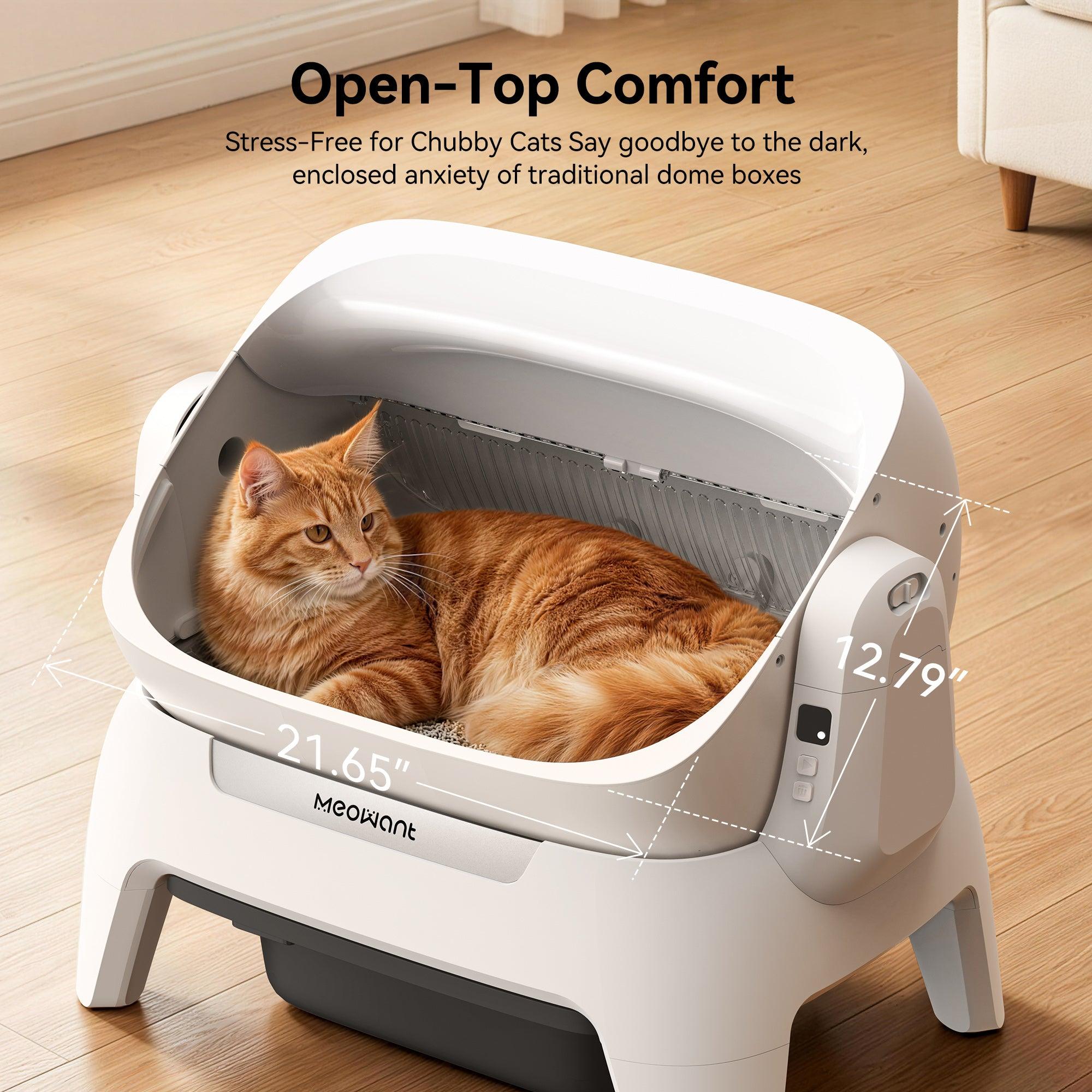
Not every litter works in every box. Fine clumping litter generally performs best because it forms compact, liftable clumps, while lightweight or crystal litters can confuse the rake. Size matters too: large cats need room to turn around, and a cramped interior leads to accidents outside the box. Meowant designs its automatic boxes around generous entry space for exactly this reason, and it is a detail worth checking against your cat’s build before you commit.
Living With One: What Changes in Your Routine
The first week is an adjustment for both of you. Keep the old box nearby during the transition, mix some used litter into the new one so it smells familiar, and resist the urge to hover. Most cats investigate within a day or two; a few need a week. If your cat avoids the machine, pause the automatic cycling for a few days and run it manually until trust builds.
After that, the routine shrinks to a handful of tasks: check the waste drawer, top off litter, wipe the interior occasionally, and replace the filter on schedule. Deep cleaning every few weeks keeps the plastic from holding odor. The payoff is subtle but consistent — a box that looks and smells acceptable at any hour, without anyone having to remember.
What to Check Before You Buy
Because these machines are difficult to return once a cat has used them, a little diligence beforehand saves a lot of hassle. The most useful questions have nothing to do with styling and everything to do with how the box will behave in your specific home.
First, confirm the interior dimensions against your cat. A large or elderly cat needs to enter, turn around, and dig without touching the sides. Second, ask how the unit behaves during a power outage or a sensor fault — does it fail safe, and can you still use it manually? Third, check what happens when the waste drawer fills: does the machine stop cycling and warn you, or does it keep running and push waste into a corner? Finally, look at the litter requirements and whether the rake is designed for the clumping litter you already use. Each of these details is easy to overlook in a product listing and difficult to fix later.
The Maintenance You Cannot Skip
Automation reduces scooping, but it does not eliminate upkeep. Expect to empty the waste compartment regularly, top off litter more often than you might think because the rake distributes it thinly, and wipe down the interior every couple of weeks. The rake itself can collect residue over time, which affects how cleanly it lifts clumps. A monthly inspection of the sensors and the rake path prevents most of the complaints owners report after the first few months, and it takes only a few minutes.
Where the Box Should Live
Placement affects both acceptance and performance. Choose a quiet spot away from the cat’s food and water, with enough clearance for the cat to approach without feeling cornered. Avoid damp basements and areas with extreme temperature swings, since moisture and heat affect how litter clumps and how odor develops. A machine that cycles in a busy hallway will startle more cats than one tucked into a calm corner, so give the box a little privacy while keeping it accessible.
A Cleaner Box, a Calmer Household
Automatic litter boxes are not magic, and they do not remove every chore. They do remove the twice-daily scooping ritual that dominates so many cat households, and they keep the box in a usable state when life interferes. The decision comes down to whether the machine cycles reliably, whether your cat accepts it, and whether the maintenance it does require fits your routine.
If you have been scooping for years and wondering whether the upgrade is worth it, the honest answer is that it depends on the design. Choose a model with dependable sensors, sensible waste storage, and enough interior room for your cat, and the daily burden genuinely shrinks. Choose on price alone and you may spend more time troubleshooting than scooping. For most owners who make the switch thoughtfully, the result is a quieter home and a cleaner box — which is exactly what they were searching for.