
Custom Tin Cans Guide: What to Expect for Custom vs. Standard Designs
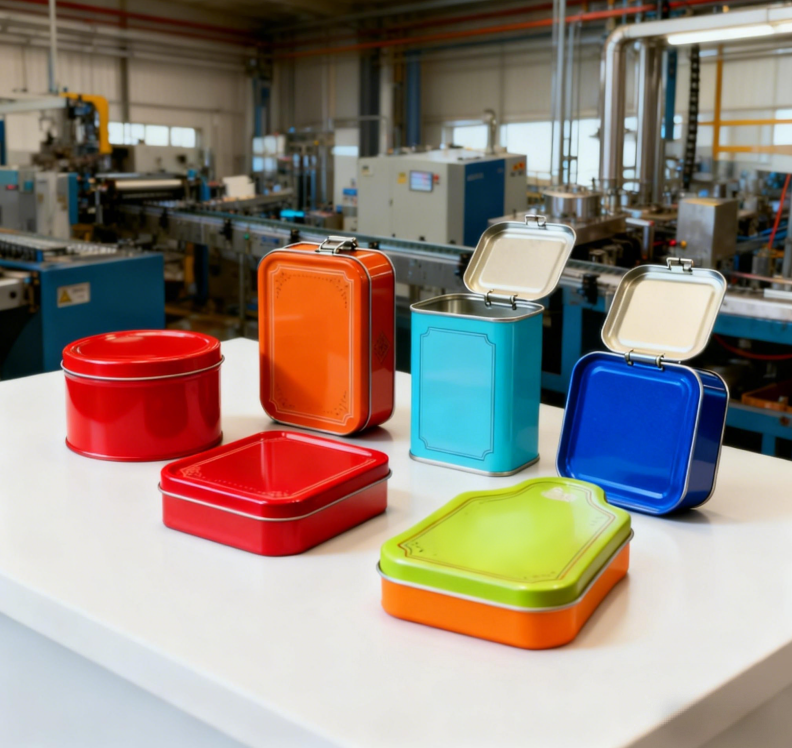
All successful packaging decisions begin with a clear vision. When clients consult with us at Tsing, they often ask a seemingly simple yet profound question: “Should I choose a standard tin can or a custom tin can?” The answer is rarely black-and-white. It depends on brand positioning, order volume, budget planning, and long-term development strategy.
Custom tin cans are no longer exclusive to luxury brands or large-scale production. Today, food companies, tea brands, cosmetics manufacturers, candle makers, and promotional marketers are all using them as a strategic tool to differentiate their products in a competitive market. Meanwhile, standard tin cans still play a vital role in fast-paced, cost-sensitive projects.
Custom Tin Cans vs. Standard Tin Cans: A Detailed Look at Structural and Design Differences
At its most fundamental level, the difference between custom and standard tin cans lies in control. Standard tin cans are pre-formed molds with fixed dimensions, lid styles, and tolerances. They are efficient, predictable, and readily available.
In contrast, custom tins allow clients to customize the can structure, including diameter, height, wall thickness, corner radius, lid type, embossing depth, and even opening resistance. This structural freedom is crucial for brands that need packaging to fit specific product shapes or shelf layouts. From a manufacturing perspective, custom designs require mold development and engineering validation. However, they also ensure consistency across product lines. Clients often find that once a custom design is finalised, it becomes a reusable packaging asset rather than a one-time expense. In fact, custom structures lead to long-term operational efficiency, not complexity.
Custom Tin Can Branding Solutions: Printing, Embossing, and Surface Treatments
In terms of brand expression, custom tin cans significantly outperform standard solutions. Standard tin cans typically have limited decoration options, often just simple CMYK printing or labeling. This works for generic or short-term uses, but lacks emotional impact.
Custom tins support a wide range of advanced branding techniques, such as 3D embossing, gravure printing, spot UV varnish, matte varnish, metallic inks, and textured coatings. These are not insignificant decorative elements; they influence customers’ perception of product quality, trustworthiness, and value the moment they interact with the product. From a marketing perspective, packaging is often the first point of contact between consumers and the brand. As one of our long-term clients put it, “Customers have already decided whether they like the product before they even open the can.”
Beyond Unit Cost: A Pricing Perspective
One of the most common misconceptions about custom tins is that they are always “expensive.” In reality, cost must be evaluated over the entire lifecycle, not just the initial unit price.
Standard tin cans have low upfront costs and require no mold fees, making them suitable for test marketing or small-batch production. However, their unit price is relatively fixed, and design flexibility is limited. Custom tin cans require mold investment, but as production volume increases, the unit cost typically decreases significantly. More importantly, custom packaging can reduce secondary costs such as liners, fillers, or oversized shipping cartons. In the long run, many clients find that custom tin cans can lower the total packaging cost per product.
Delivery Time and Order Planning
Another key difference between custom and standard tin cans is the lead time. Standard tin cans can usually be shipped immediately or within a few weeks. Custom projects, however, require a structured timeline that includes design confirmation, mold making, sample production, and mass production. While this process takes longer, it also reduces uncertainty. Once the custom tin can is approved, subsequent orders benefit from consistent quality, delivery, and reliability. This will result in high predictability. This reliability is crucial for brands with seasonal product launches or international distribution channels.
Quality Control and Compliance Considerations
Custom tin cans differ significantly from standard stock products in terms of quality requirements. Custom projects allow tighter control over material grades, coating standards, food-contact compliance, and mechanical tolerances.
For industries such as food, tea, cosmetics, or candles, compliance is paramount. Custom tin cans can be manufactured to FDA, LFGB, or other regional standards, ensuring safety and export requirements. Furthermore, custom tooling improves consistency between production batches. This reduces variations in lid fit, print alignment, and surface finish—issues often encountered with generic stock cans. From a quality management perspective, customization increases repeatability, not risk.
Choosing the Right Solution for Your Business
The choice between custom tins and standard stock tin cans should be based on strategic considerations, not emotional factors. Standard tin cans are suitable for quick market entry, short-term promotions, or projects with limited budgets. Custom tin cans are better suited for established brands, scalable products, and long-term market positioning. From a product management perspective, the key question isn’t “Can I afford custom tin cans?”, but rather “What will my brand lose without custom tin cans?” In a competitive market, packaging differentiation often determines whether a product succeeds or fails on the shelf.