
From Fiesta Tables to Food Halls: How the Philippines Can Cut Single-Use Plastic Without Losing the Joy of Sharing Food
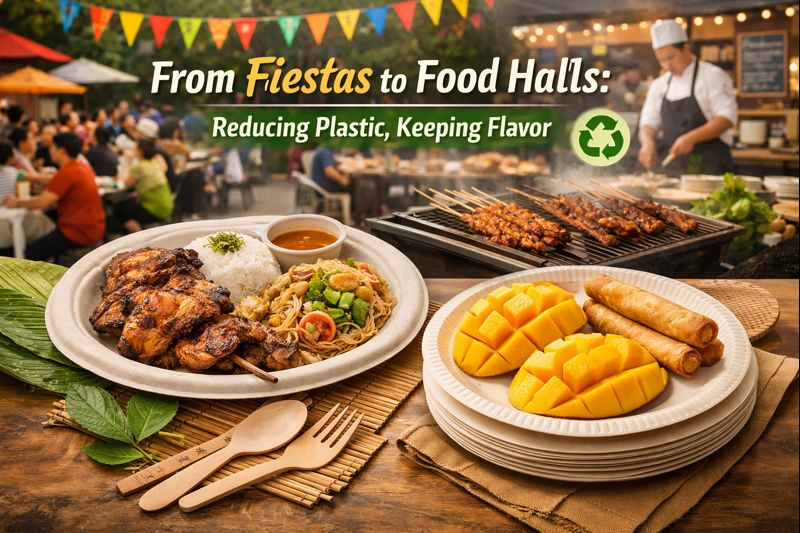
“Boss, how many plates do we need for Saturday?”
“Two hundred—maybe more. It’s a birthday and a small barangay reunion.”
“Plastic again?”
A short pause. Then the real question: “If we switch, will the plates hold up to pancit, barbecue, and gravy… without getting soggy?”
That moment—between tradition and practicality—is where a lot of Filipino parties, carinderias, cafés, and caterers are sitting today. The Philippines loves gatherings. We love food that’s saucy, oily, steamed, grilled, and shared family-style. And we also live with the downside of convenience: mountains of disposable packaging after every celebration, office lunch, or weekend market.
This article breaks down what actually works—materials, performance, cost logic, and operational tips—so you can upgrade disposable tableware without sacrificing the guest experience. For brands and buyers exploring credible supply, two reliable starting points are Bioleader and their Eco-Friendly Paper Plates for Parties, BBQs & Restaurants lineup—both relevant for B2B procurement and bulk event planning.
Why This Shift Is Happening Faster Than Many Businesses Expect
Sustainability isn’t just a “nice-to-have” anymore—it’s becoming a purchasing requirement driven by three forces:
1) Consumer expectations are moving upstream
Across foodservice markets, surveys consistently show that a strong majority of diners prefer brands that reduce plastic and improve recycling/compostability options. In practical terms: guests may not say it at the table, but they remember whether your packaging feels modern, clean, and responsible—especially on social media.
2) Waste management realities are tightening the budget
Single-use plastic is lightweight and cheap at checkout—but expensive downstream. Municipal waste systems and private haulers carry growing pressure from landfill volume, contamination, and collection frequency. When pickup schedules tighten or fees rise, the true cost of “cheap plastic” shows up on your P&L.
3) Performance standards are improving
Ten years ago, many “eco” plates were flimsy or soggy. Today, molded fiber (bagasse), upgraded paperboard, and better coatings have changed the game. That’s why more procurement teams now treat compostable or fiber-based disposables as a spec-driven category—not a lifestyle choice.
What Works Best for Filipino Food: A Material-by-Material Breakdown
Not every “eco plate” is built for lechon, sisig, barbecue, kare-kare, or arroz caldo. Here’s the procurement-grade view.
Bagasse (Sugarcane Fiber): The Workhorse for Saucy and Oily Dishes
Bagasse is made from sugarcane residue after juice extraction. It’s molded into plates, bowls, clamshells, and trays.
Strengths
- High heat tolerance for hot meals and steam-heavy dishes
- Better oil resistance than basic paper plates
- Stiff structure—doesn’t collapse under heavy portions
- Premium feel for events and restaurant plating
Best for
- BBQ skewers, grilled liempo, chicken inasal
- Pancit with oil, lumpia with sauce dips
- Rice meals with viands and gravy
- Buffet service where holding time matters
Paper Plates: Great for Dry-to-Moderate Foods (If You Buy the Right Spec)
Paper plates vary wildly. The key is GSM (paper weight), rim structure, and whether they use a safe barrier layer.
Strengths
- Cost-effective for volume events
- Lightweight logistics and easy stacking
- Clean branding surface for private label and event identity
Best for
- Bread, pastries, kakanin, sandwiches
- Dry finger food and light snacks
- Short holding time meals (fast turnover)
Procurement note: If your menu includes oily barbecue or saucy viands, look for paper plates engineered for foodservice—reinforced rims and better grease resistance. This is exactly why buyers often shortlist purpose-built SKUs like Eco-Friendly Paper Plates for Parties, BBQs & Restaurants instead of generic retail plates.
PLA and Bioplastics: Strong for Cold Use, Not a Universal Plate Solution
PLA is excellent for cold cups and clear lids, but for hot and oily plate applications, it’s usually not the best first move unless the product is specifically engineered for it.
Best for
- Cold dessert servings
- Beverage accessories and cold packaging systems
The “Soggy Plate” Problem: Why It Happens and How to Prevent It
If you’ve ever seen a plate bend under pancit or leak after barbecue sauce, it’s not just “bad luck.” It’s usually one of these issues:
1) Holding time is longer than the product design assumption
Many entry-level disposables assume 10–15 minutes of use. Filipino gatherings often stretch longer—guests go back for second rounds, plates sit while conversations happen.
2) Heat + steam softens structure
Even when food isn’t “wet,” steam from hot rice and viands can saturate paper quickly.
3) Oil is the silent killer
Oil breaks down fibers and coatings faster than water does. That’s why sisig, lechon, and grilled meats are the ultimate stress test.
Operational fixes that work
- Use molded fiber plates for mains; reserve paper plates for snacks and desserts
- Separate sauces into small cups instead of pouring over the plate early
- Choose compartment plates for mixed rice meals to reduce pooling
- For BBQ stations, pre-stage sturdier plates at the grill line to prevent mid-service plate swaps
A Buyer’s Checklist: How to Choose Eco Plates Like a Procurement Team
If you buy based on “looks eco-friendly,” you’ll get inconsistent performance. Buy based on specs and service conditions.
Key evaluation criteria
- Load capacity: Can it hold a full rice meal + viand without bending?
- Heat tolerance: Does it handle hot rice, soup-adjacent dishes, steam?
- Oil resistance: Will it resist BBQ glaze and fried items?
- Rim rigidity: A reinforced rim prevents spills and makes the plate feel premium.
- Stackability & storage: High-volume events need fast setup and minimal storage footprint.
- Food-contact compliance: You want consistent quality and documentation from the supplier.
Questions to ask suppliers
- What temperature range is supported for hot food use?
- Any testing for oil resistance and soak time?
- Are there PFAS-free options for grease barriers?
- What’s the MOQ and how does pricing scale at container level?
- Can they provide consistent cartons, labeling, and mixed SKU loading?
This is where established manufacturers like Bioleader matter, because “capacity + consistency” is the real KPI in foodservice—not just the material name.
Scientific and Market Signals: What the Data Generally Shows
While results vary by region and waste system, most lifecycle and waste-stream analyses point to a consistent theme:
- Material choice changes end-of-life outcomes. Fiber-based packaging (molded pulp, paperboard) is more likely to fit paper/fiber recovery pathways when contamination is managed, while conventional plastic often ends up as residual waste due to sorting challenges.
- Consumer behavior responds to visible upgrades. Studies across foodservice indicate that when packaging clearly communicates sustainability and feels premium, customers rate the brand higher and show stronger repeat intent—especially among younger urban diners.
- Operational waste reduction often beats “perfect materials.” The biggest gains come from reducing unnecessary items (double plates, extra cutlery, redundant layers) and standardizing SKUs that match your menu.
Business takeaway: Don’t chase a “magic material.” Build a system: right plate for the right food, with standardized purchasing and predictable performance.
Bioleader in Practice: A Foodservice Case Study (Anonymized, Procurement-Style)
Below is a composite case study based on common B2B adoption patterns seen in Southeast Asian foodservice purchasing. It is anonymized to protect buyer identity, but structured the same way procurement teams measure success.
Case: Metro Manila events + small restaurant group (3 locations)
Challenge
- Weekend events (150–400 guests) used thin plastic plates that felt cheap
- Complaints about messy tables and leaking sauce
- Brand aimed to reposition as “modern Filipino comfort food” with better presentation
Solution
- Shifted mains to bagasse molded fiber plates (stiffer, better heat handling)
- Used foodservice-grade paper plates for snacks and desserts
- Standardized sauce cups to reduce plate soaking
- Negotiated bulk cartons and consistent restock schedule through an export-capable supplier
Results (measured over 8–12 weeks)
- Lower plate failure rate during peak service (fewer plate swaps mid-line)
- Cleaner guest experience (less leakage, fewer table wipes per event)
- Improved perceived quality in customer feedback for catering packages
- Better inventory planning due to standardized SKUs and carton counts
Why it worked
Because the switch wasn’t “eco for eco’s sake.” It was a service-performance upgrade with sustainability as the strategic advantage.
How to Position Eco Plates on a Menu Website Without Sounding Like Marketing
For a site like Philippinesmenu.com, readers want practical value. If you’re a restaurant, caterer, or food brand, here’s a content angle that converts without over-selling:
Messaging that performs
- “Designed for hot, saucy Filipino dishes—no soggy plates.”
- “Cleaner tables, better plating, faster service.”
- “A more premium experience for parties and catering.”
- “Better packaging choices with the same Filipino hospitality.”
Where to apply it
- Catering package pages
- Party trays and bilao ordering pages
- BBQ bundle offerings
- Event partnerships and venue menus
Implementation Plan: Switching Without Disrupting Operations
A clean transition is a project, not a shopping decision.
Step-by-step rollout
- Segment your menu
- Dry snacks, oily mains, saucy mains, desserts
- Assign plate types by segment
- Molded fiber for mains
- Reinforced paper for snacks/desserts
- Pilot during a real service window
- Don’t test on slow days only
- Train staff on plating behavior
- Sauce timing, portioning, and holding time matter
- Standardize SKUs
- Reduce variation; buy fewer types at higher volume for better pricing
- Scale with predictable logistics
- Carton planning, storage footprint, reorder points
Quick ROI levers
- Reduce double-plating
- Eliminate unnecessary liners
- Standardize sizes across multiple dishes
- Align purchasing to peak season demand (fiesta months, holiday spikes, school events)
The Bigger Picture: Why This Matters for Filipino Food Culture
Filipino food is built on generosity—big servings, shared plates, and long conversations at the table. Disposable packaging should support that experience, not undermine it.
When you choose better plates:
- The food looks better (plating and structure matter)
- The service runs smoother (less mess, fewer failures)
- The brand feels more premium (especially for catering)
- The waste footprint is more responsible (a real business narrative, not just PR)
And importantly: customers don’t have to “trade down” in convenience to feel good about the choice.
Conclusion: A Better Plate Protects the Food—and the Brand
Back to the original conversation:
“Plastic again?”
It’s no longer the default. Not because sustainability is trendy, but because performance, brand perception, and operational reality are converging.
For Filipino parties, BBQs, and busy restaurant service, the smart move is to match the plate to the food: sturdier fiber-based options for hot, oily, saucy dishes, and well-specified paper plates for lighter items. That’s how you protect the guest experience and reduce the long-term waste burden.
If you’re building a serious upgrade path—especially for events, catering, or multi-location operations—start with credible supply and spec-driven products. Done right, the shift feels less like “going green” and more like a next-level standard for modern Filipino foodservice.